A rendered film. The scene that rendered it comes with Pro or Lifetime.
Virus infection
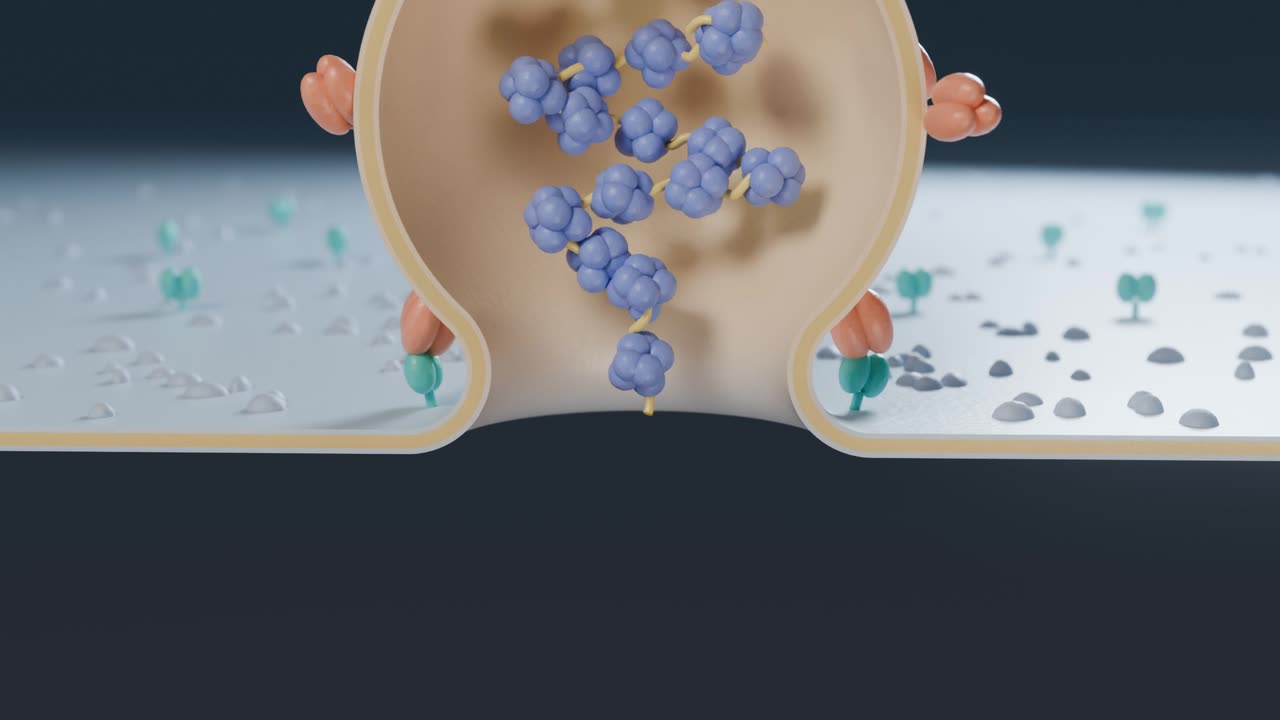
A half-cut coronavirus-like virion lands on a cut cell membrane, its spikes bind receptors and pull the membranes together, a fusion pore opens and the genome threads through into the cytoplasm, then after a cut an icosahedral capsid turns to a 5-fold axis and explodes into its 12 pentamers and 60 subunits.
Sources
- Ke et al., Nature 2020 (cryo-ET of SARS-CoV-2 spikes)
- Yao et al., Cell 2020 (cryo-ET of SARS-CoV-2)
Rendered in Blender Cycles from code: geometry, materials and motion.
Exaggerated or simplified
- Fusion takes seconds to minutes in reality and is compressed to about 2 s; the hemifusion stage is skipped, and the envelope does not fully collapse into the membrane.
- Spike refolding is drawn as the stem shortening, not the real hairpin rearrangement.
- The genome threads out like a rope, where the real one is released whole, and the RNA strand is drawn about twice as thick.
- Other envelope proteins, the sugar coat on the spikes and the cell's actin are left out.
- The capsid subunits are smoothed kite shapes, the capsid is shown at a different scale from the virion, and its faint per-pentamer tints only help the eye.